
You open an app, enter your weight, your goal, and your food preferences, and sixty seconds later you have a full week of meals with calories, macros, and a shopping list. The AI diet planner has done in a minute what used to take a coach an hour. It is genuinely impressive, and for a lot of people, it is the most organised their nutrition has ever looked. Then Thursday arrives, work runs late, the fridge is empty, and the plan quietly disappears. This is not a technology problem. It is not a willpower problem either, even though it will feel like one. It is an environment problem, and no algorithm fixes that for you.
This article is about using AI nutrition tools honestly: understanding what they are genuinely good at, where they structurally cannot help, and the one shift in thinking that determines whether any plan, AI-generated or otherwise, actually produces results.
The Plan Is Not the Problem: What Environment-Beats-Willpower Actually Means for Nutrition
Here is the position this article takes, plainly: willpower is not a nutrition strategy. It is a resource that depletes across the day, under stress, under sleep deprivation, and under the constant low-level friction of a modern schedule. Relying on it to execute a meal plan is like relying on a phone battery you forgot to charge. It works in the morning. By 8pm it is gone.
What actually drives eating behaviour, the research is fairly consistent on this, is the environment around the person. What is visible, accessible, and effortless tends to get eaten. What requires planning, preparation, and decision-making under pressure tends not to. This is not weakness. This is how human decision-making works under cognitive load.
The environment you build is the diet you actually follow. Everything else is just a plan.
An AI diet planner is a planning tool. It is an excellent planning tool. But a plan sitting on your phone does not change what is in your kitchen, what your default order is when you are too tired to cook, or what happens at the office when someone puts pastries on the table at 11am. The environment around you operates at a level below conscious decision-making. That is why the same person can follow a plan perfectly at home and completely abandon it travelling, or nail their nutrition in January and lose it entirely when a work project goes sideways in March. The plan did not change. The environment did.
This is not a reason to dismiss AI nutrition tools. It is the exact frame you need to use them well.
What an AI Diet Planner Actually Does Well
Be specific about this, because there is real value here that should not be undersold.
Structure and a starting point
Most people who struggle with nutrition are not failing because they lack information. They are failing because they have no structure. An AI planner solves that immediately. It produces a calorie target, a macro split, and a meal framework based on your inputs, in seconds. That structure alone, even if imperfect, is more useful than none.
Reducing decision fatigue
One of the most underappreciated reasons people eat poorly is decision fatigue, not appetite, not cravings. When you do not know what to eat, you default to whatever is easiest. A pre-built meal structure eliminates that daily decision, and eliminating decisions is a genuine environmental intervention. The plan becomes the default. Defaults matter enormously.
Nutritional awareness at speed
AI tools can teach you a lot about what is actually in food without requiring a nutrition qualification. Seeing the protein, carbohydrate, and fat content of your regular meals is useful data. It recalibrates what "a portion" actually means in a way that reading about it never quite does.
Where an AI Diet Planner Falls Short
This is not a criticism of the technology. It is an honest account of what the technology cannot see.
It does not know your real life
An AI planner works from the information you enter. That information is almost always an idealised version of your life: average sleep, average stress, three training sessions a week, mostly home-cooked meals. It does not know about your 6am flight on Wednesday, your daughter's birthday dinner on Saturday, the week you slept four hours a night because of a work deadline, or the fact that your office keeps a permanent bowl of sweets at reception. Those variables are not edge cases. They are your actual life, and they are exactly where most plans break down.
It cannot observe your patterns
A good coach watches what you actually do over weeks and months, not what you intended to do. They notice that you consistently undereat on work-from-home days, overeat on weekends, or that your protein intake drops every time your training volume increases. An AI tool only knows what you log. The gap between what people log and what they actually eat is one of the most consistent findings in nutrition research. The tool is only as accurate as the honesty and precision of its inputs.
Macro estimates are formulas, not measurements
The calorie and macro targets an AI planner generates are based on population-level equations, most commonly some version of the Mifflin-St Jeor formula. These are reasonable estimates for most people, but metabolic rate varies meaningfully between individuals with similar stats. Treat the numbers as a starting hypothesis to test over two to four weeks of real data, not a precise prescription to follow indefinitely without adjustment.
The Framework: Using AI as an Environment Tool, Not a Willpower Tool
The reframe is this. This is not about getting a better plan. This is about building a better environment, and using the AI planner as one piece of that build.
- Step 1: Generate the structure. Use the AI tool to produce your calorie target, macro split, and a rough meal framework. Do not obsess over perfection at this stage. A workable structure you will actually follow beats an optimal one you will abandon.
- → Step 2: Audit your environment before you start. What is in your kitchen? What are your default meals when you are tired? What does your week actually look like, not your ideal week? The plan needs to fit that reality, not a cleaner version of it.
- → Step 3: Reduce friction for the behaviours you want. Pre-cook protein on Sunday. Keep the foods that support your plan visible and accessible. Make the off-plan choices slightly harder to reach, not impossible, just not the path of least resistance. This is environmental design, and it works without willpower.
- → Step 4: Use the app to learn, not to comply perfectly. Track for a few weeks to build nutritional awareness. Identify where your pattern breaks, not to judge yourself, but to understand the mechanism. A derailment always has a cause: a specific day, a specific trigger, a specific environment. Name it.
- → Step 5: Adjust the plan to fit reality, not the other way around. A plan is a tool. If it does not fit your life, modify it. The goal is consistent adherence over months, not a perfect week followed by a collapse.
Where This Fits in a Real Nutrition System: Nutrition Adherence and Fat Loss
At SanoobFit, Nutrition Adherence is one of the defined APEX standards, and it becomes a genuine focus at Stage 2, Transformation, which is where people are actively working toward fat loss, muscle gain, or body recomposition. This is not beginner territory. These are consistent people who are ready to go further, and the reason they plateau is almost never the plan. It is adherence, and adherence is determined by environment, not effort.
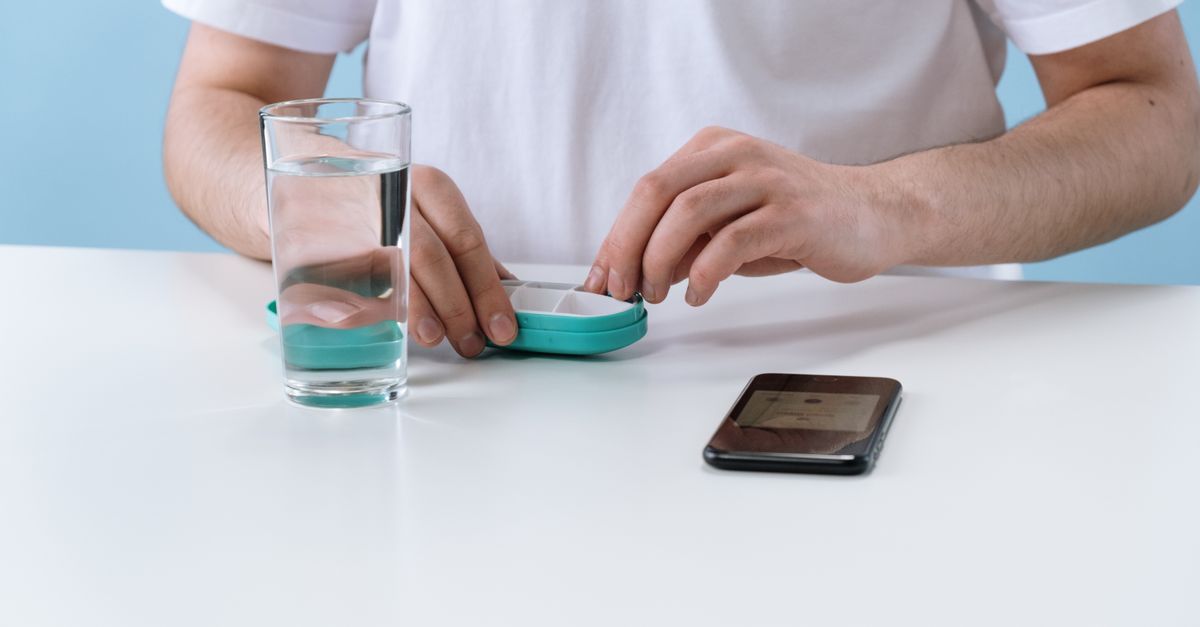
The APEX Fat Loss program is built around this reality. The structure it creates is not just a calorie target and a training split. It is a system: one that accounts for the gap between intention and execution, and closes it through design rather than discipline. That is a fundamentally different approach to fat loss than the conventional advice to just eat less and try harder.
If you are using an AI diet planner and finding that the plan makes sense but the results are not coming, the adherence standard is worth looking at honestly. Are you following the plan 80 percent of the time, or closer to 50? Is the environment around you set up to support the behaviour you want, or is it set up against it? Those questions matter more than the macro split.
If you want individual guidance on Nutrition Adherence or how the Fat Loss program might apply to your specific situation, SanoobFit offers a movement and lifestyle assessment alongside online coaching for people who want to move beyond the plan and into a system that actually works for their real life.
The Honest Verdict on AI Diet Planners
An AI diet planner is a genuinely useful tool. It reduces the cost of getting started, gives you a clear structure, and builds nutritional awareness faster than most other methods. What it cannot do is build the environment that makes following a plan feel possible day after day, week after week, in a real life with real friction.
The technology gives you the map. Your environment determines whether you actually make the journey.
Explore more in our Nutrition hub.
Related reading: