You download a new personalized workout app, answer fifteen questions about your goals, your schedule, and your fitness level, and feel genuinely optimistic. Three weeks later you have opened it twice. The plan is still sitting there, unchanged, waiting. The problem is almost never that you lack willpower. It is that the app built a program without building an environment, and without the right environment, even a technically brilliant plan disappears the moment life gets busy. That is the real test of any personalized workout app: not what it promises on the app store, but whether it is designed to make training the easier choice on a Tuesday when you are already tired.
The Real Reason Generic Apps Fail (And What a Personalized Workout App Actually Means)
This is not a motivation problem. This is an environment problem.
Most fitness apps frame the challenge as: "You need to stay consistent." What they mean, without saying it, is: "You need more willpower." That framing is wrong, and it is why the average fitness app loses most of its active users within the first month. Willpower is a finite resource. It depletes across a working day, across a stressful week, across a month of competing demands. An app that requires you to summon it every session is not a tool. It is a test you are being set up to fail.
A genuinely personalized workout app does something structurally different: it reduces the friction between you and the next session. It fits your actual available time, not an idealized version of it. It adjusts when you miss a day, instead of marking the session failed and leaving the wreckage for you to feel guilty about. It puts the right workout in front of you at the right moment, so that opening the app and pressing start is genuinely the path of least resistance. Environment beats willpower, every time, for every person. The app that understands this is the one worth your attention.
What Adaptive Programming Actually Looks Like
The word "adaptive" appears in a lot of app marketing. It rarely means the same thing twice.
The difference between static and truly responsive programming
A static plan is a pre-written program loaded onto a calendar. You may have answered questions at sign-up, but the plan does not change based on what you actually do. A truly adaptive app reads your logged sessions, your recovery data if available, and your performance trends, and adjusts what comes next. If you completed every set at the top of the prescribed range for three sessions running, the load goes up. If you logged poor sleep and rated your energy low, the session scales back before you have to ask it to. Progressive overload applied intelligently to your actual week, not a theoretical week, is what separates a tool that produces results from one that just looks sophisticated.
The feedback loop is the feature
The most underrated feature in any personalized workout app is not the exercise library, the video demonstrations, or the streak counter. It is the feedback and adjustment loop: what happens after you log a session. Does the app use that information to change anything? If the answer is no, the personalization stopped at the intake questionnaire. That is customization, not adaptation. Look for apps where the plan visibly evolves over four to six weeks based on your actual input, not apps where you have to manually request a new program when the old one stops fitting.
What the Evidence Says About Behavior Change and App Design
Behavioral science is consistent on one point: environment shapes behavior more reliably than intention does. When researchers examine why people maintain exercise habits long-term, the factors that hold up are not motivation scores or goal-setting quality. They are proximity, convenience, and cue reliability: whether the behavior is easy to start, whether the trigger is consistent, and whether the environment removes obstacles rather than adding them.
This maps directly onto app design in practical terms.
- Session length flexibility is not a luxury feature. An app that can generate a structured 25-minute session on a compressed day, without gutting the programming logic, fits into real life. One that only works when you have a full hour does not.
- → Scheduling that recovers gracefully from a missed session, rather than flagging failure and leaving a broken calendar, reduces the psychological cost of imperfection. Consistency is not about never missing. It is about what the system does when you do.
- → Contextual reminders tied to your actual schedule, not generic daily push notifications, function more like an environmental cue and less like a guilt mechanism.
- → Movement quality guidance, even through video cues or technique prompts, reduces the uncertainty that stops beginners from starting a session at all. Uncertainty is friction. Friction kills consistency.
The Myth of the Feature List
The most common mistake when comparing personalized workout apps is evaluating them by what they contain rather than how they behave.
A large exercise library sounds impressive. In practice, most people at the beginning of a training journey need twelve to fifteen movements, learned and loaded progressively, not three hundred options that produce decision fatigue before the warm-up. A calorie burn estimate sounds useful. In practice, wearable and app-based calorie estimates carry significant error margins and can undermine sound nutritional decisions if treated as precise. A streak counter sounds motivating. In practice, it converts one missed session into a reason to abandon the app entirely, because the streak is broken and the sunk cost is gone.
This is not an argument against features. It is an argument for reading them honestly. The question is never "does this app have X?" The question is "does X make it easier or harder to show up next time?"
The environment you train in matters more than the effort you bring to it. Build a system that makes the next session easier to start, and you will not need to rely on motivation to finish it.
Where This Fits: Training Consistency, Stage 1, and the Busy Professional
The APEX Standards at SanoobFit define Training Consistency as the foundational requirement at Stage 1, the Foundation stage, where the goal is simply to become consistent. This is the stage that applies to beginners, to people who are healthy but untrained, and to busy professionals who have tried programs before but have not yet built training as a reliable habit. It is not a lesser version of fitness. It is the non-negotiable prerequisite for every stage that follows.
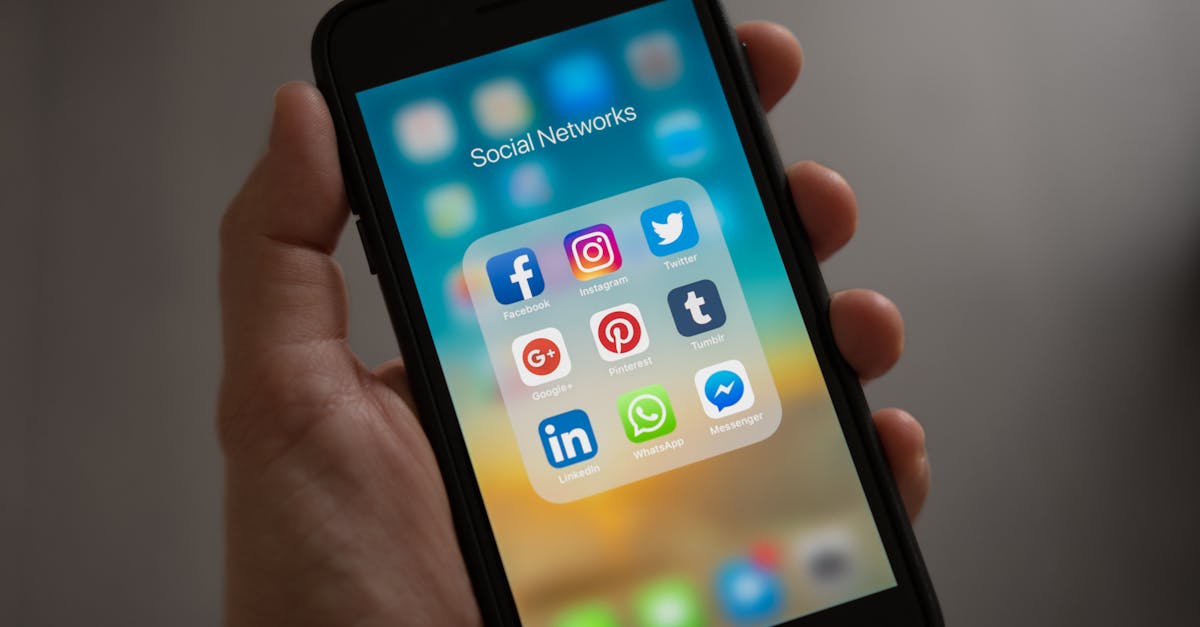
At this stage, the question is not which program is most effective in isolation. The question is which program actually gets done. The Busy Professional program at SanoobFit is built around this reality: sessions that fit a realistic working schedule, progressive structure that does not require gym expertise on day one, and a coaching layer that adjusts to the actual week rather than an idealized one. An app, however well designed, delivers programming. A coach delivers programming and judgment. If you are comparing personalized workout apps and finding that even the best ones feel like they are missing something, that something is usually a real human understanding your specific starting point.
SanoobFit Online Coaching exists for exactly this reader: someone who has done the research, knows what they want, and is ready to move from comparing tools to actually building the habit with a structure that is built around them. If that is where you are, exploring the programs at Sanoobfit.com/programs is a natural next step.
The best personalized workout app is the one that makes skipping harder than showing up, and the person who figures that out about their own behavior has already solved most of the problem.
Explore more in our Wearables & Tech hub.
Related reading: