
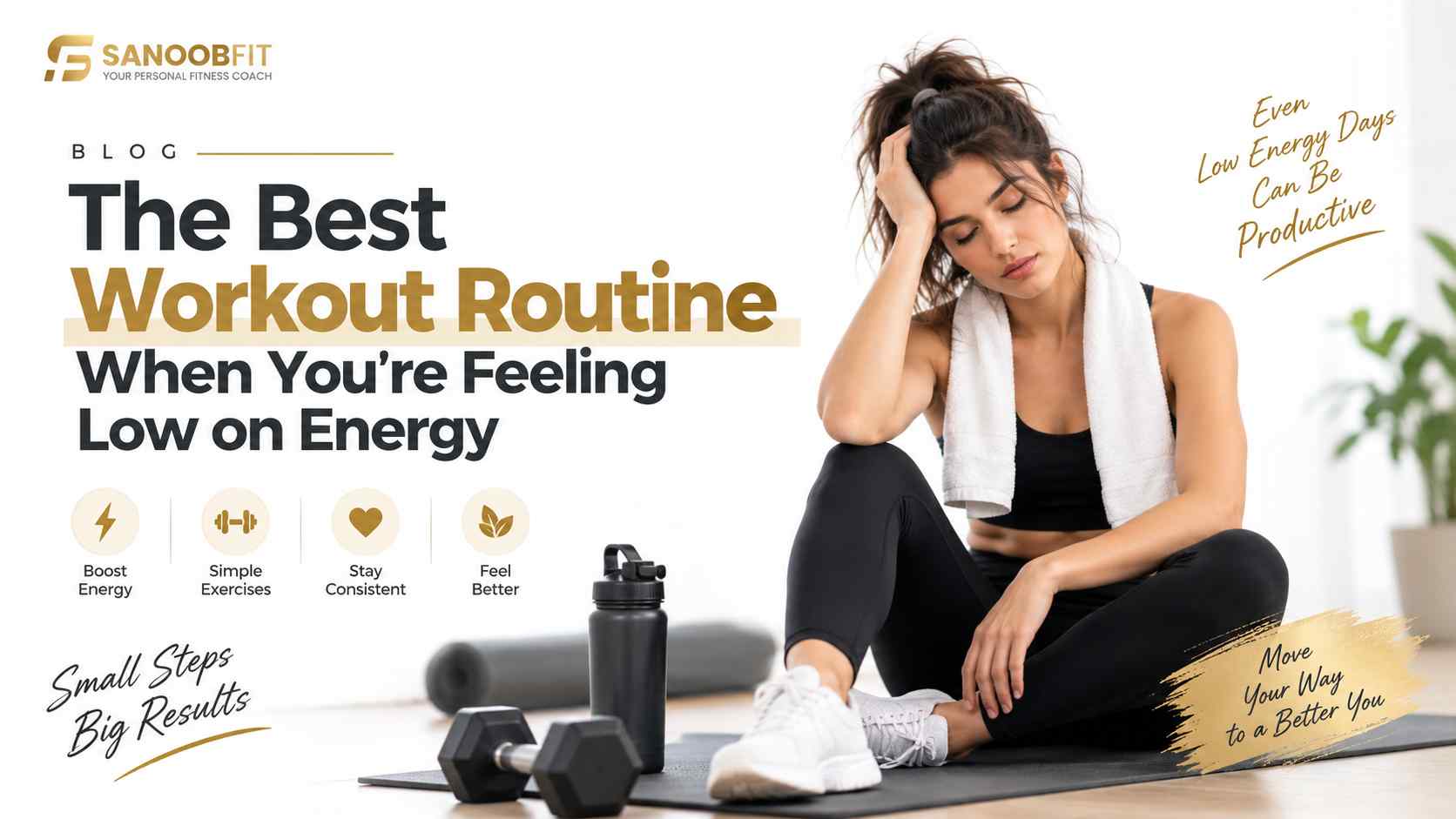
Sometimes you wake up feeling tired, mentally drained, or simply not ready for an intense workout. That does not necessarily mean you need to skip movement altogether. In many cases, adjusting the intensity and choosing simple exercises can help you stay active without putting unnecessary stress on your body.
The key is to listen to your body and change your workout according to how you feel.
A low-energy day is not the right time to chase personal records, complete exhausting circuits, or push through severe fatigue. Instead, focus on gentle movement, mobility, controlled exercises, and recovery.
What Is the Best Workout When You Have Low Energy?
The best workout on a low-energy day is usually a short, low-to-moderate intensity session that keeps you moving without leaving you completely exhausted.
A simple routine can include:
- 5 minutes of gentle warm-up
- 10–15 minutes of light strength or bodyweight exercises
- 5 minutes of stretching and mobility
- Controlled breathing throughout the session
The goal is not to maximize calories burned or training intensity. The goal is to maintain movement while respecting your current energy level.
1. Start With a Gentle Warm-Up
When you are feeling tired, do not immediately jump into demanding exercises.
Spend around five minutes warming up gradually. Start with movements that feel comfortable and allow your body to become more active.
Try:
- Slow marching in place
- Shoulder circles
- Arm swings
- Hip rotations
- Gentle bodyweight squats
- Ankle movements
- Light walking
Your warm-up should feel easy. If you begin feeling worse rather than better, that is a useful signal to reduce the workout or stop.
2. Try a Short Bodyweight Circuit
You do not always need heavy equipment for an effective low-energy session.
A simple bodyweight circuit can work several major muscle groups while keeping the workout manageable.
Try this beginner-friendly sequence:
Bodyweight Squats
Perform 8–12 controlled repetitions.
Keep your chest comfortable and move through a range of motion that feels natural.
Wall Push-Ups
Perform 8–12 repetitions.
Wall push-ups are a simpler alternative to traditional push-ups and can be useful when your energy or strength is limited.
Glute Bridges
Perform 10–15 repetitions.
Lie comfortably on your back, bend your knees, and gently lift your hips while engaging your glutes.
Bird Dogs
Perform 6–8 repetitions per side.
Move slowly and focus on maintaining control rather than rushing through repetitions.
Standing Calf Raises
Perform 10–15 repetitions.
Use a wall or stable surface for support if necessary.
Rest between exercises whenever you need it.
3. Keep the Intensity Comfortable
A common mistake on low-energy days is trying to exercise at your normal intensity.
Instead, use the talk test as a simple guide.
If you can speak comfortably while exercising, the intensity is generally manageable for a lighter session. If you are struggling to catch your breath or feel unusually exhausted, reduce the intensity.
You can make the workout easier by:
- Doing fewer repetitions
- Taking longer breaks
- Using lighter resistance
- Slowing down
- Reducing the number of exercises
- Shortening the workout
There is no benefit in turning an already difficult day into an unnecessarily exhausting workout.
4. Walking Can Be Enough
Sometimes the simplest workout is the best option.
A relaxed walk can provide movement without the physical demands of a hard training session. You can walk outdoors, around your neighborhood, at work, or even indoors.
Try starting with 10–20 minutes at a comfortable pace.
If you feel better after walking, you can continue for a little longer. If you still feel drained, finishing the walk and resting is perfectly reasonable.
5. Add Mobility Exercises
Low energy can sometimes make your body feel stiff, particularly if you have spent many hours sitting.
Mobility exercises can help you move more comfortably without requiring a demanding workout.
Consider adding:
- Cat-cow movements
- Gentle spinal rotations
- Hip circles
- Shoulder mobility drills
- Hamstring stretches
- Chest-opening movements
- Gentle ankle mobility
Move slowly and avoid forcing your body into uncomfortable positions.
6. Try a 15-Minute Home Workout
When you do not feel like traveling to a gym, a Home Workout can be a practical way to maintain your routine.
Here is a simple 15-minute option:
Minutes 1–3: Marching and mobility
Minutes 4–8: Squats, wall push-ups, and glute bridges
Minutes 9–12: Bird dogs and calf raises
Minutes 13–15: Gentle stretching and breathing
You can repeat fewer rounds if you are particularly tired.
The purpose is consistency—not exhaustion.
7. Don't Ignore Recovery
Exercise is only one part of fitness. Recovery is equally important.
If your energy has been low for several days, consider whether you are getting enough:
- Sleep
- Food
- Fluids
- Rest days
- Relaxation
- Recovery between workouts
Training hard while consistently under-recovered can make fatigue worse.
Sometimes the smartest fitness decision is to take a proper rest day.
How Do You Know If You Should Exercise or Rest?
This is one of the most important questions to ask when your energy is low.
You may be able to do light exercise if:
- You are simply feeling less motivated than usual.
- You slept slightly less than normal but otherwise feel okay.
- Your body feels capable of gentle movement.
- You feel better after warming up.
Consider resting if:
- You feel unusually weak.
- You are dizzy or lightheaded.
- You have significant muscle soreness.
- You feel unwell or feverish.
- You are experiencing unusual pain.
- Exercise makes you feel progressively worse.
Listening to these signals is not laziness. It is part of responsible training.
Should You Exercise When You Are Tired?
Yes, if the tiredness is mild and you otherwise feel well, a lighter workout may be appropriate.
However, exercise should not become an obligation to push through every type of fatigue. If you are sick, significantly exhausted, dizzy, experiencing pain, or feeling physically unwell, prioritizing recovery is more appropriate.
The important distinction is between normal low motivation and genuine physical fatigue or illness.
How Long Should a Low-Energy Workout Last?
There is no fixed duration that works for everyone.
For many people, 10–30 minutes of gentle movement can be enough on a low-energy day.
You do not have to complete a full one-hour workout to maintain your routine.
A shorter session can still provide valuable movement while allowing you to conserve energy for recovery.
Can Low-Intensity Exercise Still Help Your Fitness?
Absolutely.
Fitness is built through consistency over time, not through one perfect workout.
A lighter session can help you maintain your exercise habit and keep your body moving. More importantly, adjusting your training intensity allows you to manage different energy levels throughout the week.
Think of your workouts as a long-term process rather than a daily test of willpower.
What If You Feel Better During the Workout?
This happens sometimes.
You may start with only a small amount of energy and gradually feel more comfortable once you begin moving.
If that happens, you can slightly increase the duration or intensity—but there is no need to suddenly turn the session into a hard workout.
Keep some energy in reserve.
Finishing a workout feeling like you could have done a little more can be a better choice than pushing until you are completely exhausted.
Simple Low-Energy Workout Plan
Here is a quick routine you can save for days when motivation and energy are limited:
| Exercise | Repetitions / Time |
|---|---|
| Marching in place | 2 minutes |
| Bodyweight squats | 8–10 |
| Wall push-ups | 8–10 |
| Glute bridges | 10–12 |
| Bird dogs | 6 each side |
| Calf raises | 10–15 |
| Gentle stretching | 3–5 minutes |
Take breaks whenever necessary.
You can complete one round or two depending on how you feel.
How a Trainer Can Help on Low-Energy Days
Working with a personal trainer in Dubai can be useful when you struggle to decide how much training is appropriate on different days.
A good trainer can adjust your workout based on your current energy, experience, goals, and training history rather than forcing the same routine every day.
This can make your fitness program more flexible and realistic.
The goal should be to develop a routine that fits your life—not one that makes you feel guilty whenever you need to slow down.
Frequently Asked Questions
What is the best exercise when you have no energy?
Walking, gentle mobility exercises, stretching, and simple bodyweight movements are good options when energy is low but you otherwise feel well. Keep the intensity comfortable and stop if you feel worse.
Should I skip my workout if I feel tired?
Not necessarily. If you are mildly tired but feel physically well, reducing the workout intensity may be enough. If you feel sick, dizzy, unusually weak, or experience pain, rest may be the better choice.
Is a 15-minute workout enough?
Yes. A short workout can still provide useful movement, particularly when your alternative is doing nothing. Consistency over time matters more than making every workout long.
Can walking replace a gym workout?
Walking can be an excellent low-intensity activity, particularly on recovery or low-energy days. However, it does not provide exactly the same training stimulus as strength or resistance exercises.
How can I get more energy before exercising?
Adequate sleep, hydration, regular meals, and appropriate recovery can all support energy levels. Avoid relying on excessive stimulants to force yourself through intense training when your body needs rest.
Final Thoughts
Feeling low on energy does not mean you have failed at fitness.
Some days are naturally more difficult than others. Instead of abandoning your routine completely or forcing yourself through an exhausting workout, adjust the session to match how you feel.
A short walk, gentle mobility session, or simple bodyweight routine may be all you need.
The bigger picture matters. Sustainable fitness comes from knowing when to challenge yourself and when to recover.
A balanced approach can help you stay consistent, enjoy exercise, and build habits that are realistic for your everyday life.
For people looking for practical and personalized fitness guidance, Sanoobfit focuses on creating sustainable training approaches that can adapt to individual goals and daily routines.