You glance at your fitness watch in the morning and it shows a number labeled HRV, maybe 42, maybe 68, maybe something that looked fine last week and looks worrying today. You have no idea if that is good, bad, or whether you should change anything. If that is where you are, you are in the right place. Understanding what is heart rate variability and should I track it comes down to one idea: your heart is not a metronome. The tiny variations in the gaps between beats are your body's way of reporting how recovered it actually is. That report is written almost entirely during sleep.
This guide breaks down what HRV actually measures, why it matters for training and health, and when tracking it genuinely helps versus when it is just another number adding noise to your morning.
What Heart Rate Variability Actually Is (and Is Not)
Your heart beats roughly 60 to 100 times per minute at rest. But those beats are not evenly spaced. If your heart rate is 60 beats per minute, that does not mean a beat lands exactly every 1,000 milliseconds. The gaps vary, beat to beat, sometimes by 20 milliseconds, sometimes by 80. Heart rate variability is simply the measure of that variation.
The reason those gaps vary is your autonomic nervous system. Two branches are always in conversation: the sympathetic branch, which accelerates and activates, and the parasympathetic branch, which slows and restores. When the parasympathetic branch is dominant, which is where you want to be during recovery and sleep, those beat-to-beat gaps become more variable. When the sympathetic branch is running the show, because of stress, illness, overtraining, or poor sleep, the gaps become more rigid and uniform. Higher HRV generally reflects better parasympathetic tone. Lower HRV reflects a system still in a state of stress or incomplete recovery.
This is not a fitness score. This is not a strength score. It is a recovery signal.
Why HRV Is Generated During Sleep, Not During Training
Here is the part most wearable marketing quietly skips. HRV does not improve in the gym. It improves overnight. Sleep is not the background to recovery. Sleep is where the actual physiological work happens: the hormonal repair, the nervous system restoration, the tissue rebuilding. Your training creates the stimulus. Sleep delivers the adaptation. HRV is one of the clearest signals of how well that overnight process actually ran.
You do not get fitter when you train. You get fitter when you recover from training. Sleep is where that deal is paid.
Consistent sleep deprivation reliably suppresses HRV, because the parasympathetic recovery that drives those beat-to-beat variations needs uninterrupted sleep to occur. Cut the sleep, and HRV drops. Restore the sleep, and HRV climbs back. The signal is that clean. This is not aging. This is not a broken nervous system. This is an incomplete recovery cycle, and it has a name and a fix.
What lifts HRV over time is not a new tracking app. It is consistent, quality sleep. It is managing chronic stress. It is building a training routine that actually includes recovery. And it is the accumulated effect of months of regular exercise. The wearable just makes the result visible.
What Is Heart Rate Variability Telling You When the Number Drops?
A drop in HRV is information. It is rarely a crisis. The honest list of things that reliably lower your HRV includes: one or two nights of poor sleep, alcohol the night before, a particularly hard training session, an oncoming illness, high psychological stress, dehydration, and travel across time zones. None of those are character failures. Every single one is a named mechanism with a named cause.
Reading the signal honestly
A single low reading means almost nothing on its own. HRV is most useful as a trend, tracked across three to four weeks or more, so you can see your personal baseline and notice when you are genuinely trending down. A reading ten to fifteen percent below your personal average for several consecutive days is a meaningful signal to pull back. A single dip the morning after a late flight is just information about a late flight.
The practical framework looks like this:
- One low reading: note it, train normally, watch tomorrow
- → Two or three low readings in a row: reduce intensity, prioritise sleep, check stress
- → A week or more trending down: take a genuine recovery block seriously, then investigate what changed
- → Consistently low baseline for weeks: something structural needs to change, sleep, workload, nutrition, or stress management
The Myth: More Data Means Better Decisions
This is not universally true. For someone in the first few months of training, HRV tracking can become a distraction or, worse, a source of anxiety. The number fluctuates for dozens of reasons. Someone who does not yet have stable sleep habits, consistent training, or a feel for their own recovery is better served by building those foundations first, then adding the data layer once there is something stable to measure against.
HRV tracking makes the most sense when you are already doing the work: sleeping seven to nine hours consistently, training with a real program, managing stress well enough that you can function. At that point, HRV becomes a useful sensitivity check, an early warning system for overreaching or under-recovering before it becomes injury or illness. Before that point, fixing sleep and stress will move your HRV more than any wearable feature ever will.
What devices actually measure
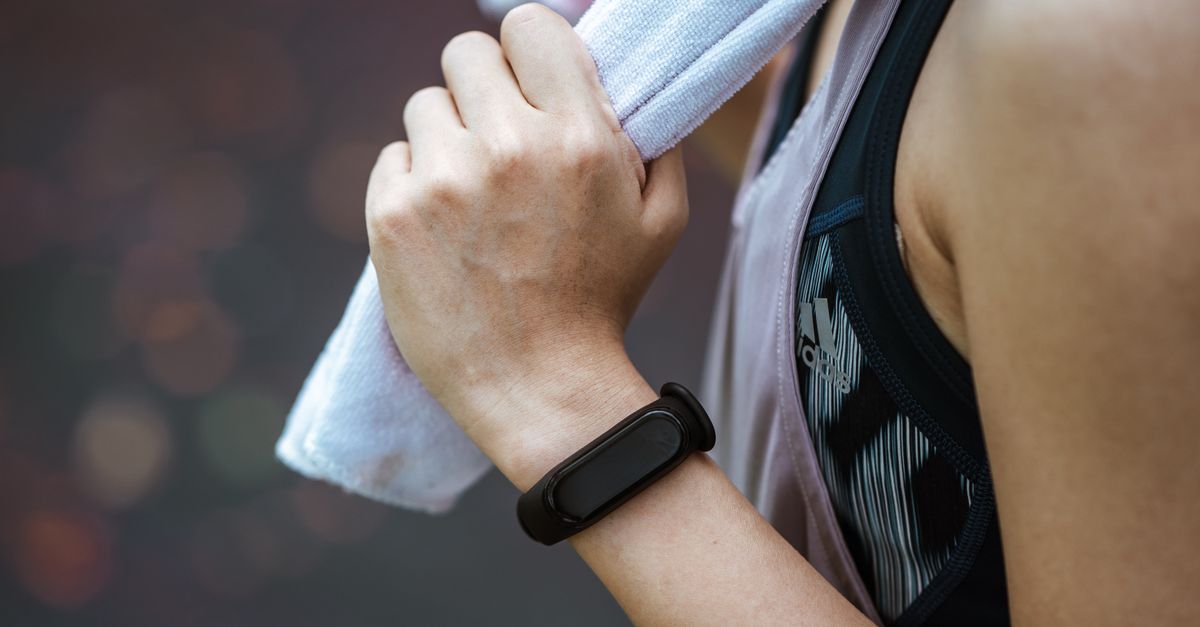
Consumer wearables measure HRV primarily through optical sensors on the wrist, which estimate the signal from light absorption in your blood vessels. This is less precise than a clinical ECG chest strap but accurate enough for trend tracking in most healthy people. The absolute number varies between devices and brands, so comparing your HRV score to a friend's from a different device is not meaningful. Your own trend, on your own device, over your own weeks, is what matters.
Should I Track It? Where HRV Fits in a Real Training System
At SanoobFit, Heart Rate Variability sits within the APEX Standards at Stage 2, Transformation, the stage for consistent trainees who are ready to pursue genuine body composition change, whether that means fat loss, muscle gain, or recomposition. At that stage, recovery quality stops being a background variable and becomes a primary training variable. The program built specifically around this is Recovery, which addresses the full picture of sleep, stress, nervous system load, and the daily habits that determine whether your training actually produces results or just accumulates fatigue.
The reason HRV lands here, and not at an earlier stage, is deliberate. A beginner's most urgent job is to show up, build the movement habit, and eat enough protein. An intermediate trainee who is already consistent faces a different problem: they are doing the work but not always getting the return. More often than not, that gap is a recovery gap, not a training gap. HRV gives that gap a number, and the Recovery program gives it a solution. If you want individual guidance on interpreting your own HRV trends and building a recovery strategy around your actual training, SanoobFit's movement assessment and online coaching is a sensible place to start.
Your training stimulus is only as valuable as the recovery that follows it. Track the recovery, protect the sleep, and the number on your wrist starts to mean something real.
Explore more in our Wearables & Tech hub.
Related reading: